
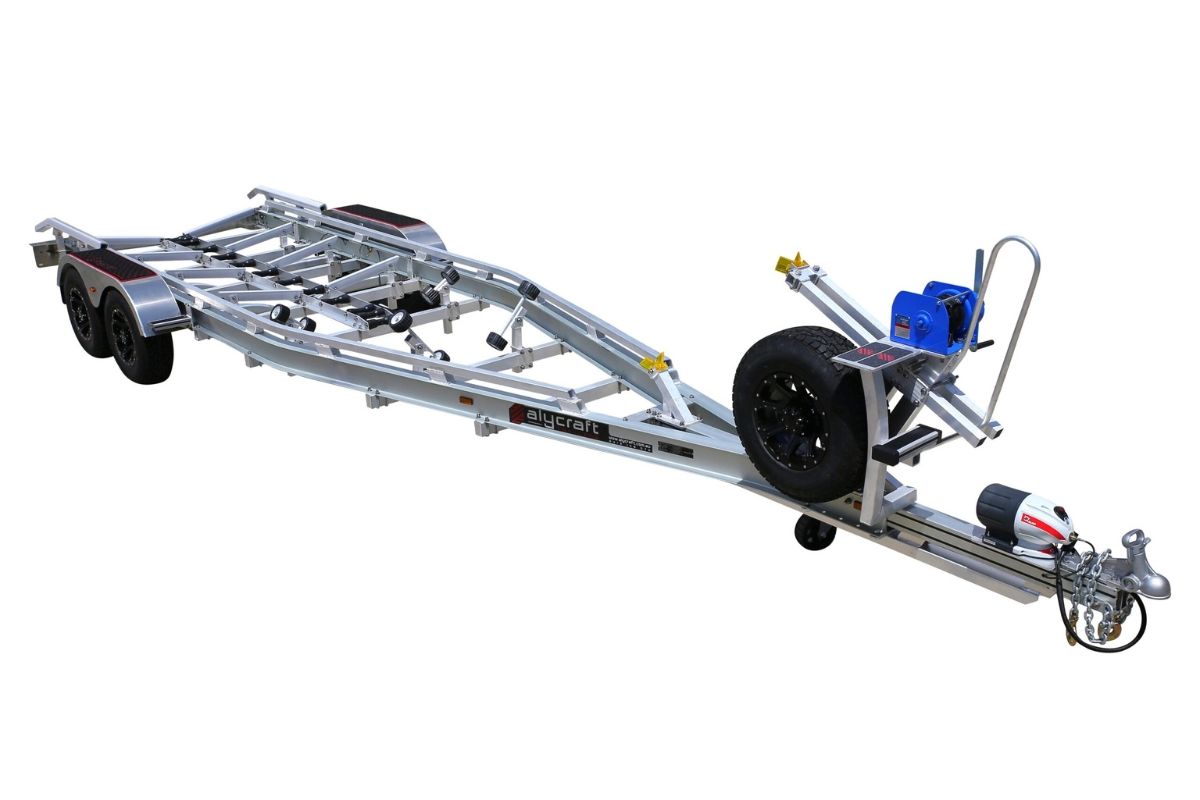
Queensland offers some of Australia’s best boating conditions, from the tropical waters of Far North Queensland to the beaches and waterways of the Sunshine Coast, Brisbane and the Gold Coast. However, the same coastal environment that makes boating enjoyable can be particularly demanding on boat trailers. Saltwater, humidity, heat, frequent launching, wet roads and long periods of exposure to marine conditions can accelerate corrosion and wear. Choosing the right trailer is therefore about much more than finding a frame that fits your boat. The trailer needs to provide the right combination of strength, corrosion resistance, load capacity, stability and ease of maintenance for the way you actually use your boat. For Queensland boat owners, understanding these factors before purchasing can help protect the boat, improve towing confidence and reduce ongoing maintenance.
The choice becomes even more important if your boat is regularly launched into saltwater. A trailer that performs well for occasional freshwater use may not be the best option for frequent coastal boating. Aluminium construction, suitable hardware, reliable braking components, appropriate suspension and a correctly matched carrying capacity can all make a substantial difference. Whether you are searching for Alloy Boat Trailers QLD for a new fishing boat or comparing Boat Trailers Queensland options for an existing vessel, the most important consideration is how well the trailer is designed for your boat and the environment in which it will operate.
Understand Queensland's Coastal Conditions
Queensland has a long coastline with very different boating environments. Coastal boat owners may deal with intense sunlight, high humidity, salty air, tidal water and regular exposure to seawater. In northern areas, tropical conditions can add further heat and moisture to the equation, while boat owners in south-east Queensland may regularly tow between different ramps, estuaries and coastal destinations.
Saltwater is one of the biggest concerns because repeated exposure can affect many trailer components. Corrosion may develop on the frame, fasteners, braking components, suspension hardware, rollers, brackets, axles and electrical connections. Even when a trailer appears sound externally, corrosion can gradually affect components that are difficult to inspect.
This is why the material used in the trailer frame deserves careful consideration. A trailer intended for regular saltwater use should be selected with marine exposure in mind rather than simply based on price or appearance.
Why Aluminium Is Worth Considering
Aluminium boat trailers are a popular choice for coastal boating because aluminium provides a strong combination of durability and relatively low weight. Unlike conventional steel, aluminium does not develop iron-based rust, making it particularly suitable for an environment where saltwater exposure is unavoidable.
However, choosing aluminium does not mean maintenance can be ignored. Salt, dirt and moisture can still accumulate around fittings and connections, and different metals used together can require careful consideration because of galvanic corrosion. A quality trailer should therefore use suitable materials and construction methods throughout its design rather than relying on aluminium alone.
A lighter trailer can also be beneficial when towing. Reducing trailer weight can leave more capacity available for the boat, fuel, equipment and accessories while potentially making the towing combination easier to manage. The actual allowable load must always be determined from the trailer and vehicle specifications rather than assuming that a lighter frame automatically means a higher payload.
Match the Trailer to Your Boat
One of the most important purchasing decisions is selecting a trailer that properly matches the boat. Start by establishing the boat's actual weight, overall length, hull dimensions, engine weight, fuel load and the equipment normally carried onboard.
Do not calculate the trailer requirement using the dry boat weight alone. A boat that weighs a certain amount before the engine, batteries, fuel, safety equipment, fishing equipment and other accessories are added can become substantially heavier when ready for the water.
The trailer's Aggregate Trailer Mass, or ATM, must be appropriate for the complete loaded trailer. You should also consider the towing capacity of your vehicle and the relevant limits for the towing combination. Choosing a trailer simply because its advertised size appears suitable can create problems if the actual loaded weight exceeds its rated capacity.
A correctly matched trailer should also support the hull appropriately. The position and adjustment of rollers, bunks, supports and other contact points should suit the hull rather than placing excessive pressure on individual areas.
Consider the Hull Design
Different boats require different trailer arrangements. A deep-V hull, aluminium plate boat, fibreglass boat or stepped hull may each require different support positions and configurations.
The trailer should allow the boat to sit securely while travelling and should make launching and retrieval as straightforward as possible. Poorly positioned supports can create unnecessary stress on the hull and make loading difficult, particularly when dealing with crosswinds, tides or busy boat ramps.
A custom-fitted approach can be particularly valuable for owners who have a specific boat rather than a standard combination. Measurements such as overall length, transom dimensions, towing-eye position and approximate loaded weight can help determine the appropriate trailer configuration.
Look Closely at Corrosion Resistance
For Queensland's saltwater environment, corrosion resistance should be one of your highest priorities. The frame is only one part of the equation. Examine the materials used for fasteners, brackets, suspension components, braking equipment, wiring and other exposed hardware.
A trailer can have an aluminium frame but still contain components that are vulnerable to marine exposure. This means buyers should look beyond the headline material and consider the overall construction.
Pay particular attention to areas where water and salt can remain trapped. Drainage, access for cleaning and the ability to inspect important components can all contribute to a trailer's long-term condition.
For regular saltwater users, corrosion-resistant materials and sensible component selection can reduce maintenance demands and help maintain the trailer's structural integrity over time.
Choose Suspension for the Way You Travel
Suspension influences towing comfort, stability and how the trailer responds to uneven roads. The right choice depends on the boat's weight, trailer configuration, road conditions and expected use.
If you regularly travel long distances to reach different Queensland waterways, the suspension needs to cope with more than a short trip to a nearby ramp. Rough roads, corrugations, potholes and uneven surfaces can place additional stress on the trailer and boat.
A properly selected suspension system helps the trailer follow the road while carrying the intended load. It should be matched to the trailer's rated capacity rather than selected simply because it is the heaviest or most expensive option available.
Check the Braking System
Braking becomes increasingly important as the weight of the boat and trailer combination rises. Larger trailers require appropriate braking equipment, and the system should be compatible with the trailer's design and the towing vehicle.
When comparing Boat Trailers Queensland options, ask about the braking arrangement, maintenance requirements and suitability for regular saltwater launching. Brakes, lines, actuators and other components can all be exposed to water and road spray, so inspection and maintenance are essential.
Queensland registration requirements also need to be considered. Queensland Government information states that trailers with an ATM between 750 kg and 4,500 kg are among those requiring a safety certificate in specified registration situations, and trailers used on Queensland roads must be registered. Buyers should check the current requirements applicable to their particular trailer and circumstances before putting it on the road.
Think About Launching and Retrieving
A boat trailer should not only tow well; it should make the entire boat-ramp process easier. Launching and retrieving can become frustrating when the boat does not sit correctly, the trailer is difficult to manoeuvre or the support arrangement does not suit the ramp.
Consider how frequently you launch your boat and the types of ramps you normally use. A trailer that works well at a gentle ramp may require different techniques at a steeper or shallower ramp.
Ease of alignment is another consideration. A well-designed trailer should help you position the boat consistently during retrieval, reducing unnecessary effort and the possibility of damaging the boat or trailer.
For owners looking at Boat Trailers Cairns, Boat Trailers Townsville or Boat Trailers Gold Coast, the same principle applies: choose a trailer based on your boat, towing vehicle and boating routine rather than selecting one solely according to location.
Consider Trailer Weight and Towing Efficiency
Trailer weight affects the overall towing combination. An unnecessarily heavy trailer can reduce the amount of payload available for the boat and equipment and may increase the workload placed on the towing vehicle.
This is one reason aluminium construction can be attractive for boat owners. A suitably engineered aluminium trailer can provide strength without the same weight associated with many steel alternatives.
For long Queensland trips, such as travelling from an inland area to the coast or moving between different boating destinations, the weight of the complete towing combination becomes particularly relevant. Always remain within the towing vehicle's rated limits and the trailer's certified capacity.
Think About Maintenance Before You Buy
A good trailer should be practical to maintain. Saltwater users should establish a cleaning and inspection routine from the beginning rather than waiting until corrosion or mechanical problems become visible.
After saltwater use, rinse the trailer thoroughly with fresh water. Pay attention to areas around wheels, brakes, suspension, rollers, brackets and other locations where salt and sand may collect. Allow components to drain and dry where possible.
Regularly inspect tyres, wheel bearings, lights, brakes, fasteners, suspension components and structural areas. Look for signs of wear, corrosion, cracking, loose fittings or damaged wiring. Early detection is generally much easier and less costly than dealing with a failed component after it becomes a safety problem.
An aluminium trailer can significantly reduce rust-related maintenance compared with a conventional steel frame, but it is still a mechanical product that requires regular care. The combination of corrosion-resistant construction and sensible maintenance is what makes a trailer better suited to repeated marine use.
Check the Electrical Components
Trailer lights and wiring deserve special attention in a saltwater environment. Electrical connections are exposed to water, salt and road grime, so the quality and protection of the wiring system matter.
Check that lights are positioned appropriately and that wiring is routed away from areas where it can be crushed, rubbed or repeatedly soaked. After launching, inspect the lighting system regularly and repair damaged wiring promptly.
Reliable trailer lighting is not merely convenient. It is an important part of safe road use, particularly when towing at night or during poor weather.
Think About Where You Store the Trailer
Storage conditions can influence how quickly a trailer deteriorates. A trailer stored outside near the coast may experience constant exposure to salty air even when it is not being used.
If possible, store the trailer in a sheltered and well-drained location. Avoid allowing water to remain trapped around components. Keeping the trailer clean and dry between trips can help reduce the accumulation of salt and grime.
If your boat is used frequently, make cleaning part of the normal post-trip routine. A few minutes spent rinsing the trailer after each saltwater outing can be far easier than dealing with extensive corrosion or seized components later.
Local Conditions Matter
The right trailer can vary depending on how and where you boat. Tropical northern Queensland can expose equipment to intense heat, humidity and marine conditions, while south-east Queensland owners may have different towing distances and ramp environments.
For this reason, buyers considering aluminium boat trailers in Cairns should assess their regular use around northern coastal conditions, while those searching for boat trailers in Cairns may want to prioritise corrosion resistance and straightforward cleaning. Similarly, owners researching Boat Trailers Townsville or Boat Trailers Gold Coast should consider the specific boat, vehicle and launch locations they use.
The location matters, but the individual boating routine matters even more. A trailer that is ideal for someone who launches a small boat occasionally may not be suitable for an owner who travels long distances and launches a larger vessel several times a week.
Do Not Choose on Price Alone
Price is naturally an important consideration, but the cheapest trailer is not necessarily the most economical option over its useful life. A trailer that requires frequent repairs, replacement components or corrosion treatment can become expensive over time.
Instead, consider the total ownership cost. Look at the construction material, component quality, expected maintenance, load capacity, suitability for saltwater, ease of launching and availability of appropriate support.
A well-matched trailer can also help protect your boat. Poor support, incorrect loading or an unsuitable suspension arrangement may create unnecessary stress during transportation.
Ask the Right Questions Before Purchasing
Before committing to a trailer, ask whether it is designed for your boat's dimensions and loaded weight. Confirm the trailer's rated capacity and make sure it works within your towing vehicle's limits.
Ask what materials are used throughout the trailer, particularly in components exposed to saltwater. Find out about the braking system, suspension, wheel and tyre specifications, lighting and available adjustments.
It is also worth asking how the trailer should be maintained after saltwater use and what inspections should be performed regularly. A manufacturer or supplier that can clearly explain these points can make the purchasing process much easier.
Final Thoughts
Choosing a boat trailer for Queensland's coastal conditions requires more consideration than simply matching a trailer to the length of your boat. Saltwater exposure, corrosion, trailer weight, hull support, braking, suspension, towing capacity and maintenance all contribute to the long-term performance of the trailer. For regular coastal boating, an aluminium construction can offer valuable advantages, particularly where reduced rust exposure and lower trailer weight are priorities.
Whether you are comparing Alloy Boat Trailers QLD, looking for Aluminium Boat Trailers, or researching options for locations such as Cairns, Townsville or the Gold Coast, start with your boat's actual requirements and your normal boating routine. A properly matched, corrosion-conscious trailer can make towing, launching, retrieving and maintaining your boat significantly easier.
For more information about aluminium boat trailer options and solutions designed for Australian boating conditions, visit Alycraft Trailers. The right trailer is an important investment in both your boat and your boating experience, so take the time to choose one that is built around the demands of Queensland's coastal environment.